5G-Enabled Smart Ambulance & Telemedicine
 1. Background
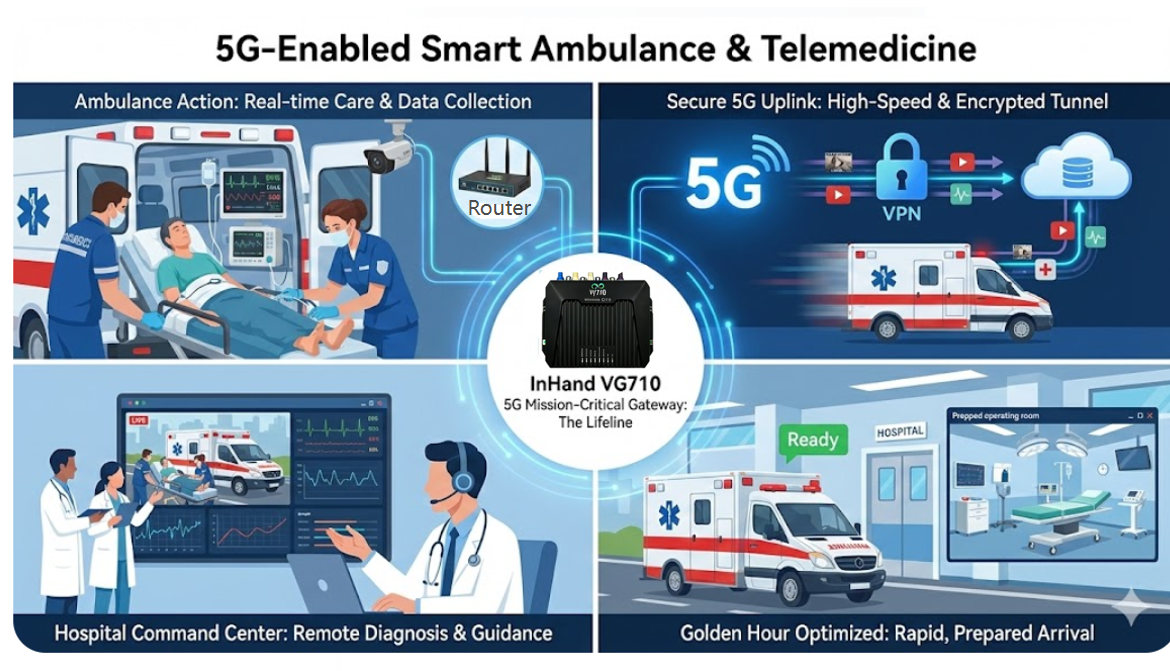
In emergency medicine, the "Golden Hour" is critical. Traditional ambulances often operate as isolated units, with paramedics unable to share high-quality data with hospital specialists until they arrive. The challenge is to transform an ambulance into a "mobile treatment room" where doctors can diagnose and guide life-saving procedures remotely while the vehicle is in transit.
2. The Solution: InHand VG710 5G Mission-Critical Gateway
The InHand VG710 serves as the ultra-reliable communication backbone of the ambulance, providing a secure, high-bandwidth "5G tunnel" between the moving vehicle and the hospital's emergency department.
3. Key Implementation Features
High-Definition Telemedicine (5G Uplink): Using the 5G 2.1Gbps bandwidth, the VG710 supports multiple 4K HD cameras inside the ambulance. This allows trauma surgeons at the hospital to see the patient in real-time and guide paramedics through complex procedures with near-zero latency.
Secure Medical Data Transmission (VPN): Patient vitals (EKG, blood pressure, oxygen levels) are sensitive data. The VG710 uses IPsec/OpenVPN to create a secure, encrypted tunnel to the hospital's private network, ensuring HIPAA-compliant data transmission.
Priority Dispatch & Routing (GNSS/ADR): Every second counts. The VG710 provides high-precision location data. Even in "urban canyons" or underpasses where GPS might fail, the Inertial Navigation (ADR) keeps the dispatch center updated on the exact position of the ambulance for optimal traffic light preemption and routing.
Medical Equipment Connectivity: On-board medical devices (ventilators, monitors) connect via Gigabit Ethernet or Wi-Fi 5. The VG710 acts as a local hub, consolidating all equipment data into a single stream to the cloud-based Emergency Management System.
Rugged Reliability for High-Speed Response: Ambulances drive fast and face significant vibration. The VG710’s milspec-grade vibration resistance and IP64 rating ensure that the connection never drops, even during high-speed maneuvers or in harsh weather conditions.
4. Hardware Advantages for EMS
Wide Power Input (9-36V): Handles the voltage fluctuations common in emergency vehicles when sirens and medical equipment are powered on.
E-Mark Certification: Ensures the gateway meets the strict electromagnetic and safety standards required for installation in emergency vehicles.
Edge Computing (Python/Docker): Can be programmed to locally trigger "Collision Alerts" or "Door Open" notifications to the fleet manager.
5. Results and Benefits
"Diagnosis Upon Entry": Doctors begin diagnosing the patient 15–20 minutes earlier than before, significantly increasing survival rates for strokes and cardiac arrests.
Optimized Resource Allocation: Hospitals can prepare the operating room or specialized equipment before the ambulance even arrives.
Continuous Connectivity: Dual-SIM backup ensures that if one carrier has a dead zone, the ambulance automatically switches to another network, maintaining the life-saving video link.
Topic Participants
david.jing