Use Case: Heavy Equipment Rental & Construction Machinery Monitoring
 1. Scenario Background
A heavy equipment rental company leases out expensive machinery (excavators, bulldozers, cranes, and backhoes) to various construction sites.
Challenges:
Billing Disputes: Billing is often based on engine usage hours, which are currently collected manually and can be inaccurate.
Theft & Unauthorized Use: High-value assets are at risk of theft or being used outside of contract hours/locations.
Harsh Environments: Equipment operates in dusty, muddy, and vibrating conditions, requiring rugged hardware.
Maintenance Delays: Failure to perform maintenance based on actual usage leads to breakdowns and costly repairs.
2. Solution Overview
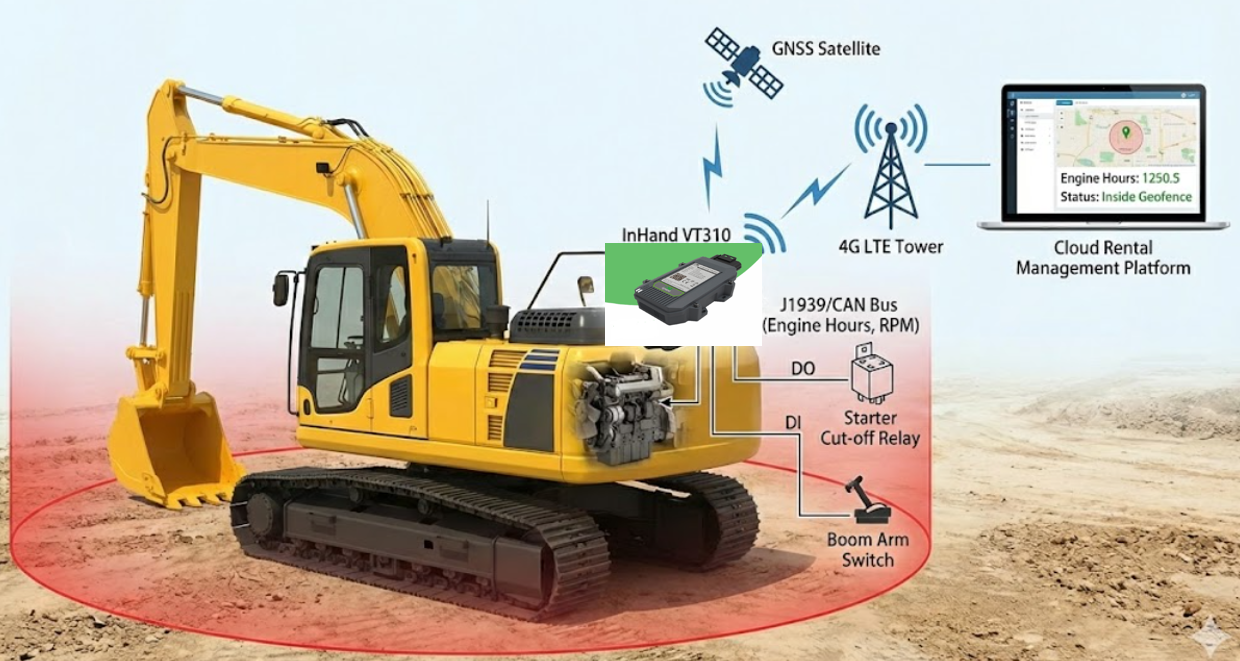
The InHand VT310 is installed on all heavy machinery. Its industrial-grade design and support for heavy-duty vehicle protocols make it ideal for tracking usage, location, and health status in real-time.
3. Implementation Details
Step 1: Engine Data & Usage Tracking (J1939/J1708)
Protocol Connection: Heavy machinery typically uses the SAE J1939 or J1708 communication standards. The VT310 connects directly to the machine's CAN bus or diagnostic port using these protocols.
Data Collection: The device reads critical telemetry such as engine RPM, fuel consumption, and total engine running hours. This data is automatically uploaded to the cloud for precise, automated billing based on actual usage time.
Step 2: Rugged Installation
Environment Proofing: Construction sites are tough. The VT310’s IP66 protection rating ensures it withstands high-pressure water jets, dust, and heavy vibrations common on job sites.
Power Stability: The 9-48V wide voltage input allows the device to run directly off the machinery's battery system without needing extra power converters.
Step 3: Theft Prevention & Remote Control (Geofencing & DO)
Geofencing: Using the GNSS positioning, the rental company sets up "virtual fences" (Geofences) around the authorized construction site. If a machine leaves this area, an alert is triggered immediately.
Remote Immobilization: A relay is connected to the Digital Output (DO) of the VT310. In the event of confirmed theft or non-payment, administrators can send a command to output a High level (12V) or Low level signal to cut off the starter motor, preventing the machine from being restarted .
Step 4: Operational Monitoring (Digital Inputs)
Status Monitoring: Digital Inputs (DI) are connected to key mechanical switches (e.g., the boom arm switch or seat switch) to monitor when specific parts of the machine are active, differentiating between "idling" and "working" time .
4. Customer Benefits
Accurate Billing: Eliminates manual meter reading errors by using digital engine hour logs for invoicing.
Asset Security: Reduces theft risk through real-time location tracking and remote immobilization capabilities.
Preventative Maintenance: Alerts mechanics when engine hours reach a service threshold, extending the lifespan of the equipment.
Lower Insurance Costs: Utilizing anti-theft tracking and driver behavior monitoring can lower insurance premiums.
Topic Participants
david.jing